Coronavirus disease 2019

COVID-19 is a contagious disease caused by the coronavirus SARS-CoV-2. In January 2020, the disease spread worldwide, resulting in the COVID-19 pandemic.

The symptoms of COVID‑19 can vary but often include fever,[7] fatigue, cough, breathing difficulties, loss of smell, and loss of taste.[8][9][10] Symptoms may begin one to fourteen days after exposure to the virus. At least a third of people who are infected do not develop noticeable symptoms.[11][12] Of those who develop symptoms noticeable enough to be classified as patients, most (81%) develop mild to moderate symptoms (up to mild pneumonia), while 14% develop severe symptoms (dyspnea, hypoxia, or more than 50% lung involvement on imaging), and 5% develop critical symptoms (respiratory failure, shock, or multiorgan dysfunction).[13] Older people have a higher risk of developing severe symptoms. Some complications result in death. Some people continue to experience a range of effects (long COVID) for months or years after infection, and damage to organs has been observed.[14] Multi-year studies on the long-term effects are ongoing.[15]

COVID‑19 transmission occurs when infectious particles are breathed in or come into contact with the eyes, nose, or mouth. The risk is highest when people are in close proximity, but small airborne particles containing the virus can remain suspended in the air and travel over longer distances, particularly indoors. Transmission can also occur when people touch their eyes, nose, or mouth after touching surfaces or objects that have been contaminated by the virus. People remain contagious for up to 20 days and can spread the virus even if they do not develop symptoms.[16]

Testing methods for COVID-19 to detect the virus’s nucleic acid include real-time reverse transcription polymerase chain reaction (RT‑PCR),[17][18] transcription-mediated amplification,[17][18][19] and reverse transcription loop-mediated isothermal amplification (RT‑LAMP)[17][18] from a nasopharyngeal swab.[20]

Several COVID-19 vaccines have been approved and distributed in various countries, many of which have initiated mass vaccination campaigns. Other preventive measures include physical or social distancing, quarantining, ventilation of indoor spaces, use of face masks or coverings in public, covering coughs and sneezes, hand washing, and keeping unwashed hands away from the face. While drugs have been developed to inhibit the virus, the primary treatment is still symptomatic, managing the disease through supportive care, isolation, and experimental measures.

Founding of YouTube A Short History

YouTube is one of the most influential platforms in modern media, but its origin story is surprisingly simple: a small team wanted an easier way to share video online. In the early 2000s, uploading and sending video files was slow, formats were inconsistent, and most websites weren’t built for smooth playback. YouTube’s founders focused on removing those barriers—making video sharing as easy as sending a link.

Who Founded YouTube?

YouTube was founded by three former PayPal employees: Chad Hurley, Steve Chen, and Jawed Karim. They combined product thinking, engineering skills, and a clear user goal: create a website where anyone could upload a video and watch it instantly in a browser.

  • Chad Hurley — product/design focus and early CEO role
  • Steve Chen — engineering and infrastructure
  • Jawed Karim — engineering and early concept support

The Problem YouTube Solved

At the time, sharing video often meant emailing huge files or dealing with complicated players and downloads. YouTube made video:

  1. Uploadable by non-experts (simple interface)
  2. Streamable in the browser (no special setup)
  3. Sharable through links and embedding on other sites

Early Growth and the First Video

YouTube launched publicly in 2005. One of the most famous early moments was the first uploaded video, “Me at the zoo,” featuring co-founder Jawed Karim. The clip was short and casual—exactly the kind of everyday content that proved the platform’s big idea: ordinary people could publish video without needing a studio.

Key Milestones Timeline

Year/Date
Milestone
Why It Mattered
2005 YouTube is founded and launches Introduced easy browser-based video sharing
2005 “Me at the zoo” is uploaded Became a symbol of user-generated video culture
2006 Google acquires YouTube Provided resources to scale hosting and global reach

Why Google Bought YouTube

By 2006, YouTube’s traffic was exploding. Video hosting is expensive—bandwidth and storage costs rise fast when millions of people watch content daily. Google’s acquisition gave YouTube the infrastructure and advertising ecosystem to grow into a sustainable business.

What YouTube’s Founding Changed

YouTube didn’t just create a popular website; it reshaped how people learn, entertain themselves, and build careers online. Its founding helped accelerate:

  • Creator-driven media and influencer culture
  • How-to education and free tutorials at massive scale
  • Music discovery, commentary, and global community trends

From a small startup idea to a global video powerhouse, YouTube’s founding is a classic example of a simple product solving a real problem—and changing the internet in the process.

Bonjour 2023, bonjour ActivityPub et le Fediverse

Presque 4 ans sans écrire ici. 9 ans depuis que j’ai parlé de Tesla (et il y aurait à redire). Et aujourd’hui, à cause de Musk et grâce au travail de centaines d’autres personnes me revoilà à taper sur mon clavier un billet de blog. Que s’est-il passé ?

Continuer la lecture de Bonjour 2023, bonjour ActivityPub et le Fediverse

Dégooglisons l’internet mondial

Vous le savez, j’en ai déjà parlé, c’est un peu ma marotte : Je n’aime pas les gafam. Une seule solution, dégooglisons ! Depuis longtemps j’y pense, depuis peu de temps j’agis un peu. Mais maintenant je voudrais me contraindre à des effets. Et c’est par le biais de ce billet de blog que j’espère y arriver. Je vais donc lister les éléments de ma vie en ligne qui ne me conviennent pas, les raisons pour cela et les alternatives que j’envisage.

Continuer la lecture de Dégooglisons l’internet mondial

L’information et les média: Soyez critiques

Nous avons souvent tendance à considérer l’information comme étant une sorte de vérité. Mais c’est très loin d’être exact. L’information est très souvent orientée, dans différents buts.

Continuer la lecture de L’information et les média: Soyez critiques
Google et ses concurrents

Pendant longtemps, choisir un moteur de recherche était un choix technique. Vais-je trouver ce que je recherche ? En combien de temps ? On avait de superbes concurrents: Exalead, Google, Lycos, Yahoo!, Altavista… Le monde était beau, le monde était gentil, et surtout, internet c’était la jungle.

Continuer la lecture de Google et ses concurrents

IPV6, enfin !

Depuis le temps que ça me chagrine. L’IPV6, vous savez tous ce que c’est. Ce protocole qui est destiné à remplacer l’IPV4. Une adresse IP vous en avez déjà vu une, genre 192.168.0.12. C’est l’adresse d’une machine sur un réseau. Votre PC en a une, votre smartphone en a une, votre box en a deux ou trois. Même votre imprimante wifi en a une. Continuer la lecture de IPV6, enfin !

Bitcoin #2: Proof of Work et Blockchain, comment ça marche ?

C’est bon, vous avez tout compris sur le Bitcoin ? Vous savez maintenant qu’il s’agit d’une monnaie comme une autre qui vise simplement à s’affranchir du contrôle des états et permettre à tout un chacun de vérifier son fonctionnement ?
On va pouvoir passer aux choses sérieuses alors: son fonctionnement sur le plan technique. Oui, on va parler de Proof of Work. Attention, cette fois je ne vais pas me priver d’utiliser du jargon. Je ne vous garantis pas que l’article soit à la portée de toutes et tous.

Continuer la lecture de Bitcoin #2: Proof of Work et Blockchain, comment ça marche ?
Bitcoin

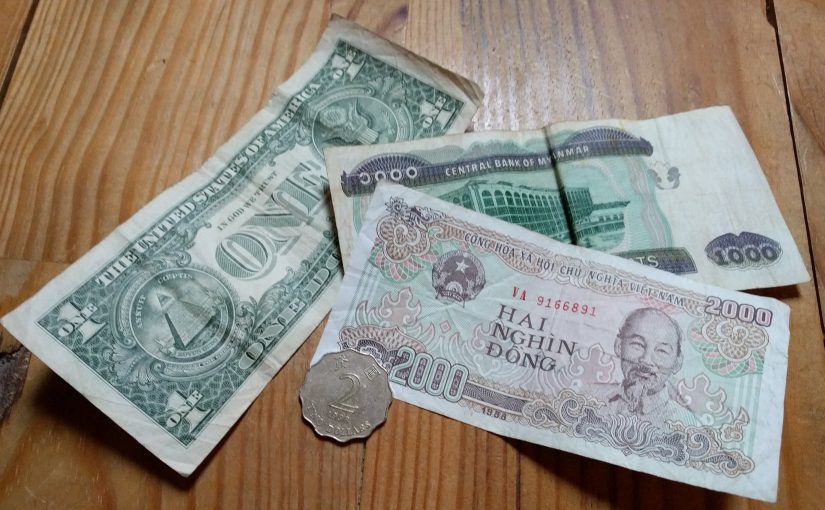
Depuis le temps que je m’intéresse au sujet (et que je l’évoque occasionnellement), je crois que le moment est venu de vous le présenter. Voici donc mon article sur le Bitcoin ! Il se pourrait bien que je répète quelques petites choses de la fois ou j’expliquai en avoir acquis un peu. Mais je vais essayer de faire ça de manière plus structurée et d’autres articles suivront sur le sujet.
Continuer la lecture de Bitcoin

Faire du stop et voir l’Allemagne

Six heures du matin, lundi. J’arrive chez moi en marchant et rejoins mon lit avec plaisir. Comment ça se fait ? Je viens de passer le week-end à faire du stop. Trois jours pour parcourir plus de 1800 kilomètres avec exactement zéro euro. Le défaut ? Il faut du temps et un peu de patience. L’avantage ? De super rencontres. Je vous conseille sincèrement de faire du stop et vais donc vous raconter mon week-end en détails.

Continuer la lecture de Faire du stop et voir l’Allemagne